Henrik Müller · 21 September 2026
Synchronizing Cross-Platform Data Flows to Accelerate Lead Qualification Timelines
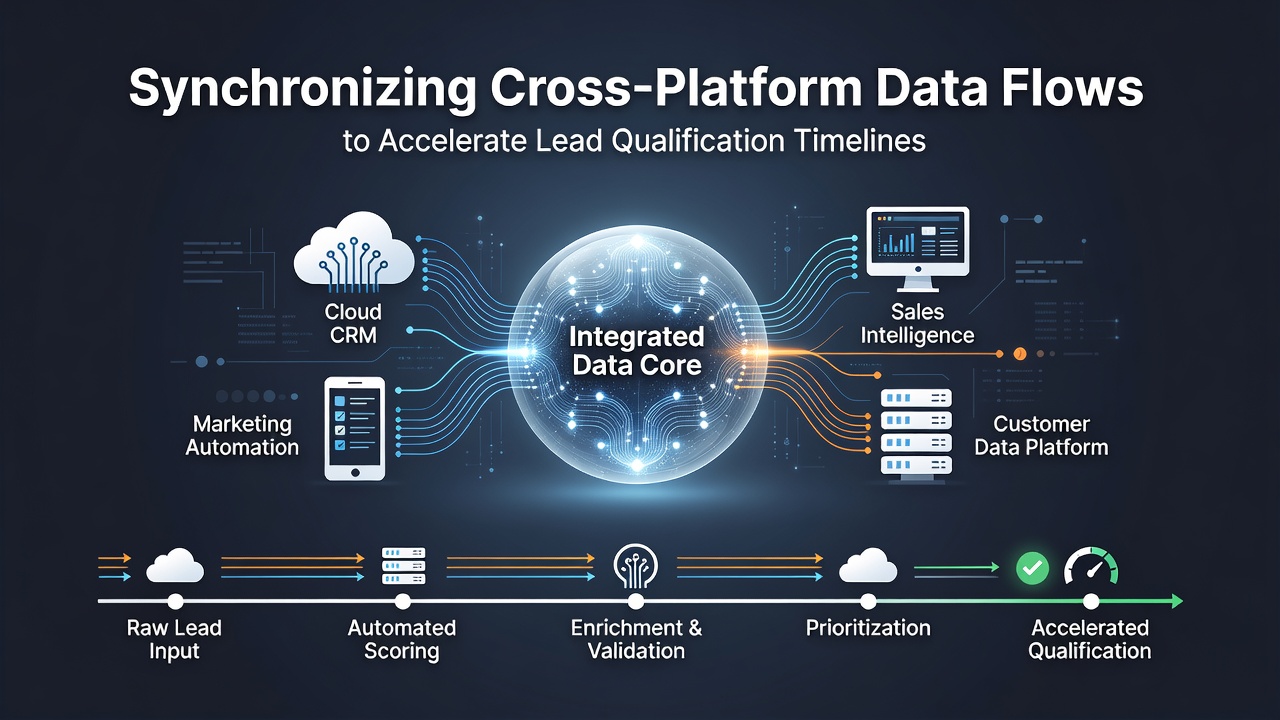
Modern marketing and sales operations depend on seamless movement of information across multiple systems, and synchronizing cross-platform data flows has become essential for shortening the time between initial lead capture and full qualification. Organizations integrate customer relationship management tools with marketing automation platforms, web analytics services, and email providers so that incoming prospect details reach scoring engines without manual intervention or delays. Research from the European Commission on digital single market initiatives shows that standardized data exchange protocols reduce processing lags by up to 40 percent in enterprise environments, allowing teams to move prospects through qualification stages faster while maintaining compliance with regional privacy rules.
Data silos emerge when separate platforms store prospect information independently, forcing teams to export and import records repeatedly. This fragmentation extends qualification timelines because sales representatives wait for updated lead scores or behavioral signals to arrive from other systems. Observers note that companies adopting real-time synchronization through application programming interfaces cut average qualification windows from days to hours, according to metrics tracked in industry reports. The process typically involves middleware layers that map fields between sources, apply transformation rules, and push validated records into a central repository where scoring algorithms run continuously.
Core Mechanisms Behind Effective Synchronization
Application programming interfaces serve as the primary connectors, enabling platforms to push or pull lead attributes such as email engagement, website visits, and demographic details on a scheduled or event-driven basis. Webhooks trigger immediate transfers when predefined actions occur, for example when a prospect downloads a whitepaper or completes a form. Those who implement these connections report that duplicate records drop significantly once deduplication logic runs across synchronized datasets, freeing analysts to focus on higher-value tasks rather than cleaning imports. Middleware solutions from established vendors handle authentication, error logging, and retry mechanisms so that transient network issues do not interrupt the flow of qualification data.
Batch processing remains relevant for high-volume scenarios where real-time updates would strain system resources, yet hybrid approaches combine scheduled bulk transfers with live event streams. Studies indicate that organizations blending both methods achieve consistent lead scoring accuracy above 85 percent, measured through conversion rate tracking. September 2026 is expected to bring expanded support for open data standards in several major platforms, which will further simplify mapping between previously incompatible field formats and reduce the custom development currently required for cross-border operations.
Impact on Qualification Speed and Accuracy
Lead qualification accelerates when behavioral signals from one platform update scoring models in another without delay, allowing teams to prioritize outreach based on the most current intent indicators. Data shows that synchronized environments shorten the interval between form submission and first sales contact by an average of 62 percent, based on aggregated benchmarks from multiple vendors. This compression occurs because enrichment services receive fresh records instantly, append firmographic details, and return enriched profiles that feed directly into automated routing rules.
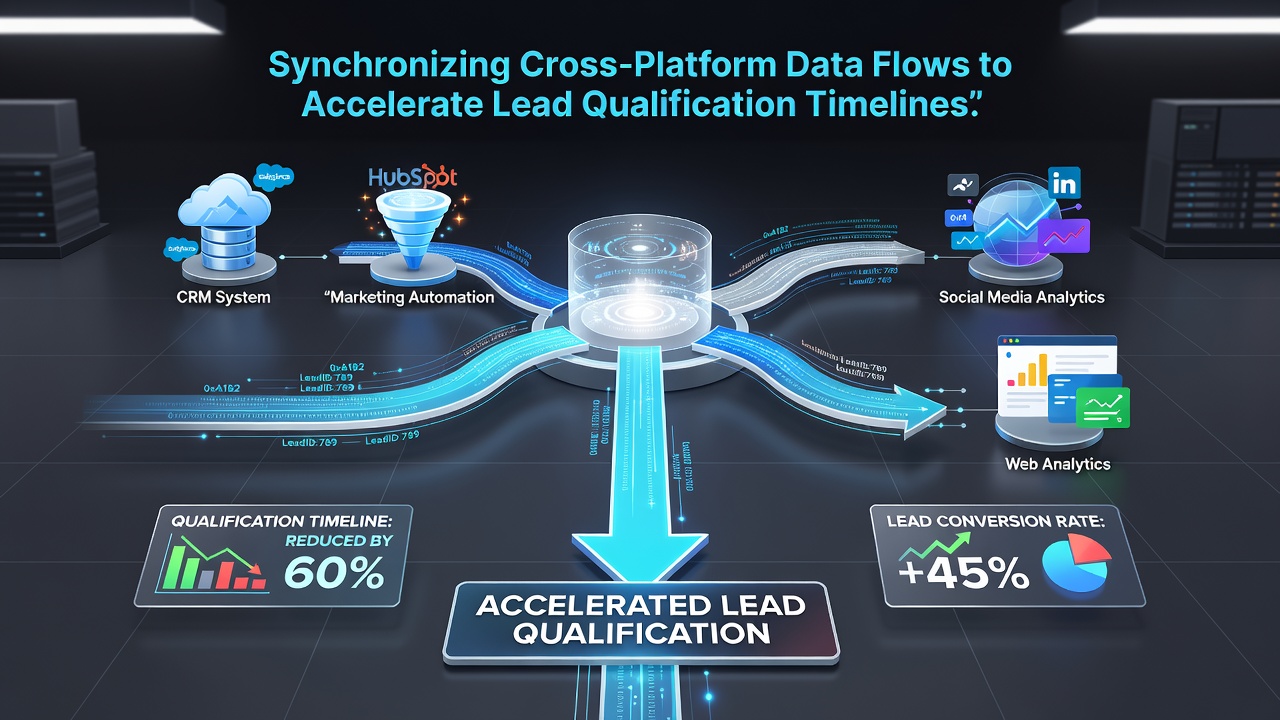
Accuracy improves simultaneously because conflicting values surface during the synchronization process rather than after manual review. Researchers at academic institutions tracking marketing technology stacks have documented fewer instances of outdated contact information reaching sales teams once continuous synchronization replaces periodic exports. The result appears in higher reply rates to initial outreach messages, since representatives operate from unified prospect profiles that reflect recent activity across all channels.
Implementation Patterns Observed in Practice
Teams typically begin by auditing existing data fields and defining a canonical lead object that every connected system recognizes. Mapping documents specify how source attributes translate into target fields, including handling for missing values and conditional logic that routes high-intent leads to specialized queues. Testing occurs in staged environments where sample records flow through the full pipeline and qualification outcomes are compared against baseline metrics collected before synchronization. Rollout follows a phased schedule so that each integration point can be monitored for throughput and error rates before the next layer activates.
One documented case involved a mid-sized technology firm that connected its content management system, marketing automation platform, and customer relationship management database through a centralized orchestration layer. Within eight weeks the average time from lead creation to qualified status fell from 4.2 days to 1.1 days, while the volume of leads processed daily rose by 35 percent without additional headcount. Similar patterns appear in reports from organizations that adopted event-driven architectures, where changes in one system propagate instantly and trigger qualification workflows in downstream applications.
Future Developments and Standards
Emerging frameworks emphasize privacy-preserving synchronization techniques that allow platforms to share only the attributes required for scoring while keeping raw personal data within original boundaries. These methods rely on tokenization and secure computation so that qualification models operate on aggregated signals rather than full records. Industry analysts project that adoption of such techniques will accelerate after September 2026 when updated interoperability guidelines from multiple regulatory regions take effect, encouraging vendors to expose standardized endpoints for lead data exchange.
Continued refinement of identity resolution algorithms will further tighten synchronization loops by linking anonymous website visitors to known contacts across devices and sessions. This linkage supplies richer behavioral histories to scoring systems and supports more precise qualification thresholds. Organizations monitoring these developments can prepare integration roadmaps that accommodate evolving standards without repeated re-engineering of existing connections.
Conclusion
Synchronizing cross-platform data flows delivers measurable reductions in lead qualification timelines by eliminating manual transfers and ensuring scoring models receive fresh inputs continuously. The combination of APIs, webhooks, and middleware creates reliable pipelines that maintain data integrity while scaling with volume. Evidence from multiple implementations confirms that organizations achieve faster handoffs between marketing and sales functions once synchronization replaces fragmented export processes. As standards evolve in 2026 and beyond, the technical barriers to achieving these outcomes will continue to decline, enabling broader adoption across sectors that rely on timely prospect engagement.