
Zara Butler · 19 October 2026
Optimizing Workflow Automation Protocols to Streamline Multi-Channel Engagement Metrics in B2B Sales Ecosystems
B2B sales teams rely on workflow automation protocols to coordinate activities across email platforms, social networks, CRM systems, and webinar tools, and these protocols create consistent pathways for collecting engagement metrics such as response rates, session durations, and content interaction levels. Research from industry observers shows that structured automation reduces duplicate data entry while maintaining accurate logs of prospect behavior across touchpoints.
Core Elements of Automation Protocols
Protocols in this space typically define sequences for task assignment, data validation, and metric aggregation, and they operate through rule-based triggers that activate when specific conditions appear in incoming records. Experts note that these rules often incorporate conditional branching so one channel failure does not halt the entire sequence, allowing parallel processing across platforms. Data shows organizations that document protocol versions achieve faster troubleshooting when metrics deviate from expected ranges.
Integration points between automation software and existing sales stacks receive particular attention during setup, while configuration files map field names, timestamp formats, and permission levels to prevent mismatches. Observers report that teams which test these mappings in staging environments before deployment encounter fewer interruptions in live metric streams.
Multi-Channel Metric Collection Practices
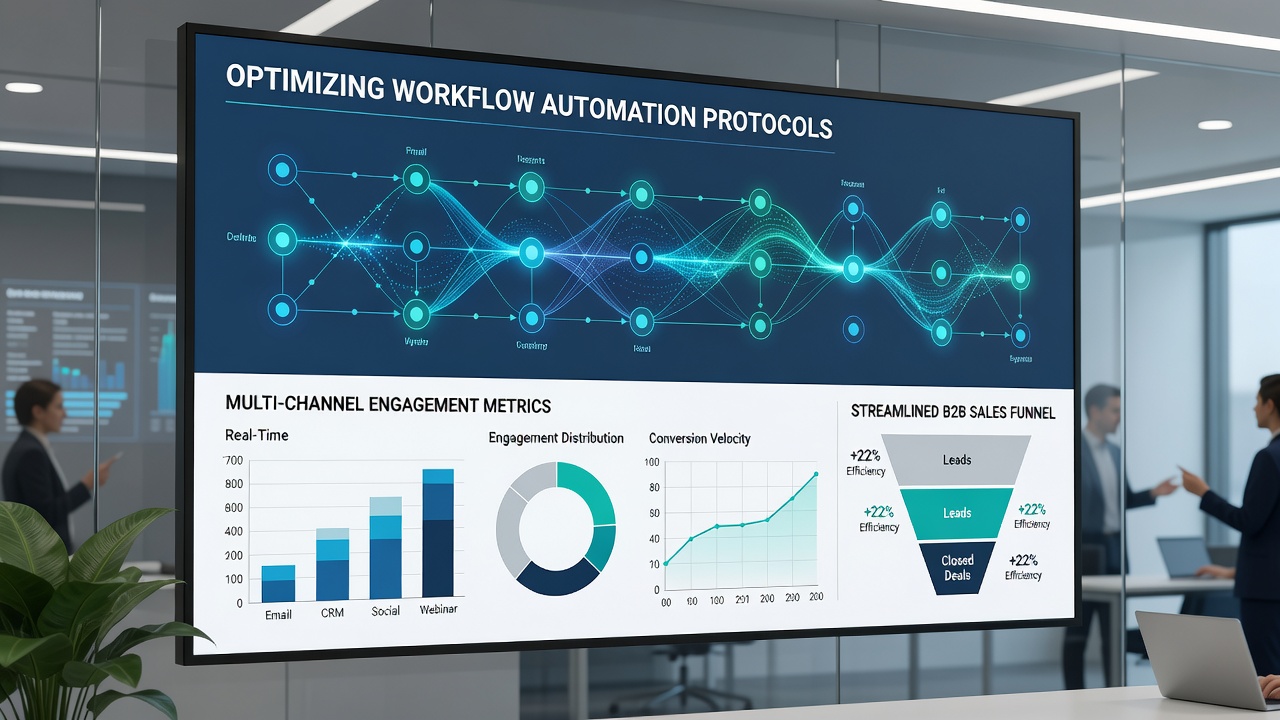
Engagement metrics in B2B environments span open rates for email sequences, click patterns on shared documents, attendance figures for virtual events, and follow-up response times on messaging platforms, and automation protocols pull these figures into unified dashboards through scheduled API calls. Studies indicate that standardized timestamp normalization across channels improves the reliability of trend analysis over weekly or monthly reporting cycles.
Those who manage these systems often establish data retention schedules aligned with internal policies, and they configure alerts that flag when engagement thresholds fall below historical averages. In October 2026, updates to digital single market guidelines from the European Commission began requiring clearer audit trails for automated metric handling in commercial applications, prompting many firms to adjust protocol logging parameters accordingly.
Refinement Techniques for Existing Protocols
Refinement starts with mapping current protocol steps against recorded metric outputs, and teams compare actual versus intended data flows to identify redundant checks or missing validation layers. Analysts frequently apply version control to protocol scripts so changes can be reviewed and rolled back if metric accuracy declines. Reports from Statistics Canada on business technology adoption highlight that firms maintaining detailed change logs achieve quicker recovery from integration issues.
Segmentation rules within protocols allow different engagement tracks for various account sizes or industries, while performance benchmarks derived from past campaigns guide adjustments to timing and content delivery. Researchers at academic institutions have documented cases where iterative testing of these segments produced measurable lifts in cross-channel consistency without increasing manual oversight hours.
Common Implementation Patterns
Many organizations begin by centralizing metric storage in a single repository before expanding automation outward, and this approach lets analysts verify baseline figures before layering additional channels. Protocol documentation usually includes decision trees that specify escalation paths when engagement data remains incomplete for a set period. Industry groups focused on sales operations note that clear escalation definitions help maintain service levels during peak campaign periods.
Training sessions for sales and operations staff cover how to interpret dashboard outputs and when to request protocol modifications, and these sessions often feature sample datasets drawn from recent quarters. Evidence suggests that cross-functional review meetings held after each major campaign cycle surface practical improvements that technical documentation alone may overlook.
Conclusion
Workflow automation protocols continue to serve as the operational backbone for tracking multi-channel engagement in B2B sales settings, and ongoing refinements keep metric streams aligned with evolving platform requirements. Organizations that maintain disciplined documentation and testing routines position themselves to adapt when new channels or compliance expectations emerge.